
Standards · Chicagoland
What Actually Makes an Appliance Technician Qualified
Anyone can own a van and a multimeter. Exactly one credential in this trade is required by federal law, and most people have never heard of it.
Appliance repair is not licensed the way electrical and plumbing work are, which means the word "certified" does a lot of unexamined work in this industry. This page sets out what is genuinely required, what is worth asking about, and what the terms on other companies' websites — including ours — actually mean.

The one credential that is not optional
Under Section 608 of the US Clean Air Act, anyone who opens a system containing regulated refrigerant must hold EPA 608 certification. It applies to refrigerators, freezers, wine coolers and ice machines — anything with a sealed cooling circuit. Venting refrigerant knowingly into the atmosphere is illegal, and the certification exists to make recovery the default rather than a courtesy.
It comes in types. Type I covers small appliances, which is where domestic refrigeration sits. Type II covers high-pressure systems, Type III low-pressure, and Universal covers all three. For a household refrigerator, Type I is the relevant one.
This is also why a sealed-system fault is a different conversation from any other appliance repair. It is not simply the most expensive failure on the machine — it is the one that legally restricts who may touch it. Our repair-or-replace guide covers when that repair is worth doing at all.
Three terms that are not interchangeable
Factory-trained
A technician has completed a manufacturer's training programme on that manufacturer's equipment. It is real and it matters — premium and commercial machines diverge sharply from volume models, and a technician who has trained on Sub-Zero or Miele equipment approaches them differently. It is brand-specific, so the useful question is which brands.
Factory-authorized
A contractual relationship between a business and a manufacturer, typically tied to performing in-warranty work on the manufacturer's behalf. This is a different thing from training, and a business can hold either without the other. When you see the phrase, it is reasonable to ask which manufacturers and for which equipment.
Insured
Liability insurance covers damage to your property — the floor, the cabinetry, the water supply — not to the appliance being worked on. It is the credential people ask about least and the one most likely to matter if something goes wrong. A dishwasher removed carelessly can take a floor with it, and no appliance warranty covers that.
Six questions worth asking before you book
None of these are hostile. All of them are answerable in one sentence by a business that has its house in order.
01
Are you EPA 608 certified?
Only relevant if the job touches refrigerant — a refrigerator, freezer, wine cooler or ice machine. But on those it is not optional, and a technician who is unclear about the answer should not be opening the system.
02
Which brands have you actually trained on?
A better question than "do you service my brand", which everyone answers yes to. Training is brand-specific, and premium and commercial equipment diverges sharply from volume models.
03
Do you carry liability insurance?
This covers damage to your home, not to the appliance. A dishwasher pulled out badly can take a floor with it, and the appliance warranty covers none of that.
04
Will you diagnose before quoting?
A price quoted over the phone from a symptom is a guess. The same symptom can be a ten-dollar part or the most expensive assembly in the machine.
05
What warranty comes with the work?
Parts and labor usually carry different terms, and a business that cannot state both without checking is telling you something.
06
Will you tell me if it is not worth repairing?
The answer you want is an unhesitating yes. A technician paid only when they repair has an incentive not to say it.
What competence looks like on the day
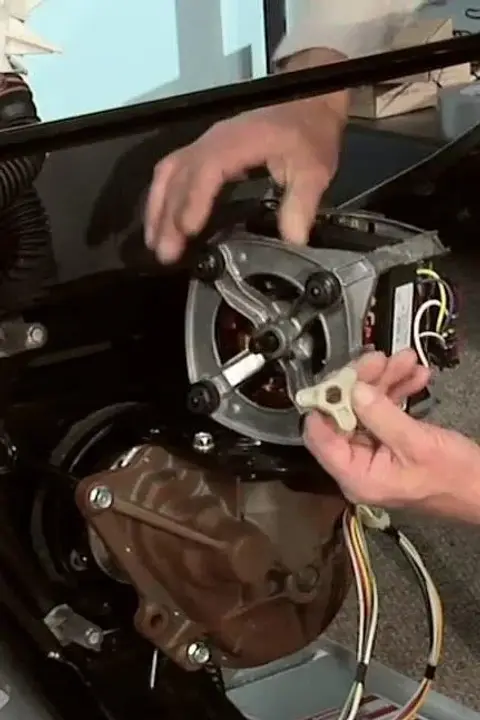
Precision diagnosis of motors, belts, couplers, and transmission components.
Credentials tell you who is allowed to do the work. What tells you whether it was done well is the sequence: questions before tools, reproducing the fault rather than taking the symptom at face value, electrical testing before anything is disassembled, and a test cycle afterwards rather than a quick power-on.
We have written that out step by step: what an appliance repair technician actually does on a service call.
The commonest failure in this trade is not incompetence with a screwdriver. It is replacing the part that is easiest to reach rather than the one that failed — which is why a diagnosis that costs a little more time is the cheapest part of the visit.
Our own standard
Factory-trained, background-checked and fully insured. Precise diagnostics done right the first time, on every major brand we service.
Across 51 appliance brands and 16 appliance categories, our technicians work a 30-mile radius from Lincolnshire. We diagnose before quoting, we quote before working, and every repair carries our warranty — 1 year on replacement parts, 90 days on the labor.
We will also tell you when a repair is not worth doing. That costs us the job, and it is the part of this we would most want you to hold us to.
Chicago · Naperville · Lincolnshire · Schaumburg · Arlington Heights · Evanston · Buffalo Grove · Deerfield
Appliance repair technicians — frequently asked questions
Do appliance repair technicians need a licence?
There is no single national licence for appliance repair the way there is for electrical or plumbing trades. What is required by federal law is EPA Section 608 certification for anyone handling refrigerant, which covers refrigerators, freezers, wine coolers and ice machines. Beyond that, requirements vary by municipality, particularly for gas work.
What is EPA 608 certification?
It is a federal certification under the Clean Air Act required to handle regulated refrigerants. It comes in types — Type I covers small appliances such as domestic refrigerators, Type II covers high-pressure systems, and Universal covers all of them. It is illegal to knowingly vent refrigerant into the atmosphere, which is why sealed-system work is restricted to certified technicians.
Does "factory-trained" mean the same as "factory-authorized"?
No, and the difference is worth knowing. Factory-trained means a technician has completed a manufacturer training programme. Factory-authorized is a contractual relationship between a business and a manufacturer, often tied to in-warranty work. A business may hold one without the other.
How long does it take to become competent at this?
Longer than most people assume. The mechanical side can be learned reasonably quickly; the diagnostic side — knowing which of six possible causes produces a particular symptom on a particular model — is pattern recognition built over years and across many machines.
Should I use the manufacturer or an independent technician?
If the appliance is still under manufacturer warranty, use the manufacturer — it costs you nothing. Outside warranty the question is availability, price and whether the technician knows your equipment. Federal law protects your warranty from being voided simply because an independent business did the work.
Book a technician who will answer all six
Call +1-800-833-1296 or book online. Monday to Saturday, 7:00 AM to 8:00 PM. More about us on our team page.