
How much does washing machine repair cost in 2026?
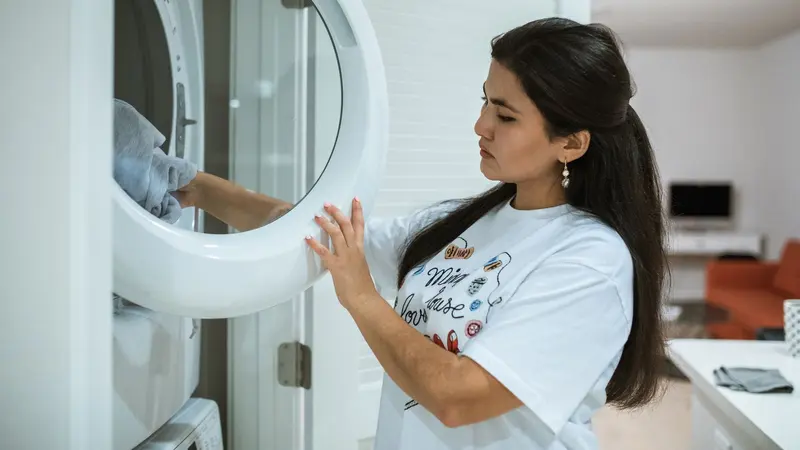 Washer & Dryer
Photo: RDNE Stock project / Pexels
Washer & Dryer
Photo: RDNE Stock project / Pexels Before you agree to a repair, it helps to know roughly what the job should run. Washer pricing varies by brand, part availability, and how much disassembly the job requires, but most repairs land in predictable ranges. Here is what homeowners are paying in 2026.
Diagnostic fees and how they work
Most independent appliance shops charge $80 to $130 for a diagnostic visit in 2026, and the majority apply that fee toward the repair if you approve the work. Ask about this before booking. A flat-rate shop quotes one number covering labor and parts; a time-and-materials shop bills labor separately, typically $110 to $175 per hour.
Drain pump replacement: $180 to $360
The pump itself runs $45 to $130 depending on brand, with LG and Bosch parts at the higher end. Labor is modest on front-loaders where the pump sits behind the lower access panel, and higher on top-loaders that require tipping or partial cabinet removal. If debris destroyed the impeller, expect the technician to also inspect the sump hose.
Door lock, lid switch, and pressure switch: $150 to $320
These are small electrical parts with big consequences. A top-load lid switch is often the cheapest common repair at $140 to $220 installed. A front-load door interlock assembly costs more, typically $200 to $320, because the boot clamp and front panel usually come off. Pressure switches and their air hoses fall in a similar range.
Bearings, shock absorbers, and suspension: $350 to $700
Shock absorbers or suspension rods on their own are a mid-priced job, roughly $280 to $450. Tub bearings are the expensive one. On many front-loaders the bearing is pressed into the outer tub, so the repair means either a full teardown or an outer tub assembly, pushing the total past $600. On those machines, replacement often wins.
Control boards and motors: $300 to $750
A main control board runs $180 to $400 in parts alone, and inverter or direct-drive motors are similar. Both are worth confirming with proper diagnosis, because a board is sometimes blamed for a failure that traces back to a wiring harness, a shorted heater, or a stuck door lock feeding bad signals to the control.
Where the break-even line sits
A common guideline is to decline a repair that costs more than half the price of a comparable new machine, especially past year eight. With mid-range washers running $700 to $1,100 in 2026, that puts the ceiling around $400 to $500 on an aging unit. On a three-year-old machine, almost any single-part repair is still worth doing.
Frequently asked questions
Is the diagnostic fee applied to the repair?
At most shops, yes, if you approve the work during that visit. Confirm it when you book so there are no surprises on the invoice.
Why are parts for some brands so much more expensive?
Brands with proprietary assemblies and fewer aftermarket suppliers cost more, and some sell an entire module where another brand sells the individual component.
Should I buy the part myself to save money?
Usually not. Most shops will not warranty labor on customer-supplied parts, and an incorrect part number means a second service call.