
Hard water is destroying your dishwasher — a Chicagoland guide
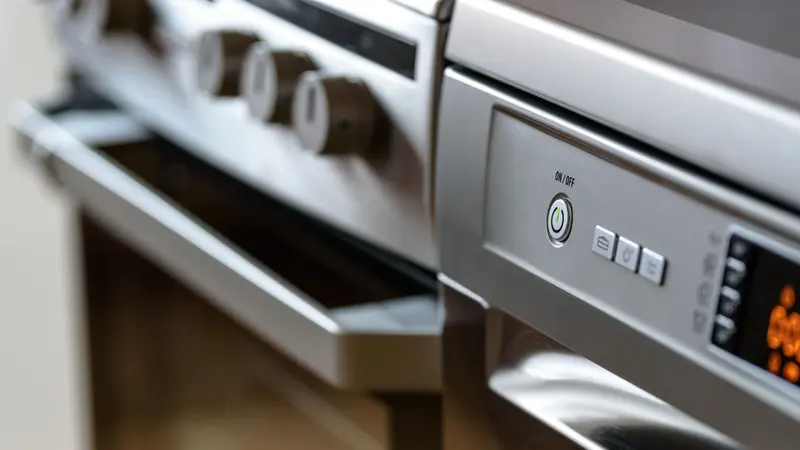 Dishwasher
Photo: AS Photography / Pexels
Dishwasher
Photo: AS Photography / Pexels Chicago proper draws treated Lake Michigan water that is moderately hard. Push west and north into the suburbs that rely on deep wells and hardness climbs sharply. That difference shows up in appliance failures: the same dishwasher model lasts noticeably longer in Evanston than in parts of Lake and McHenry counties, and the reason is mineral scale.
What hardness actually does inside the machine
Calcium and magnesium precipitate out of hot water and bond to the hottest surface available, which is the heating element. A scaled element transfers heat poorly, so the machine runs longer cycles to reach temperature, works harder, and eventually overheats the element until it fails. The same deposits narrow spray arm holes and coat the filter, which is why dishes come out gritty long before anything breaks.
Telling scale apart from a real fault
A chalky white film on glassware that wipes off with vinegar is scale. A cloudy etched haze that does not wipe off is permanent glass damage from too much detergent in soft water — the opposite problem. If the machine is filling and draining normally but simply not cleaning, check the spray arm holes with a toothpick before assuming a pump problem.
Use the built-in water softener if you have one
Most Bosch, Miele, and many Whirlpool and Electrolux dishwashers sold in the last decade contain an ion exchange softener with a salt reservoir in the tub floor. A large share of owners never fill it because they mistake it for a drain cap. Dishwasher salt costs a few dollars, and on hard suburban water it is the single most effective thing you can do for the machine.
Descale on a schedule, not when you notice a problem
Run a descaling cycle with citric acid or a commercial dishwasher cleaner every one to three months depending on hardness. Empty machine, hottest cycle, no detergent. Citric acid powder is cheap and gentler on seals than heavy vinegar use, which over years can degrade rubber door gaskets.
Rinse aid does more than you think
Rinse aid lowers the surface tension of the final rinse so water sheets off rather than beading and evaporating in place. Every bead that dries leaves its mineral content behind. On hard water, keeping the rinse aid dispenser filled measurably reduces spotting and slows the buildup that eventually reaches the element.
When the damage is already done
A dishwasher that no longer heats, throws a heating fault, or leaves dishes cold and wet at the end of the cycle has usually lost its element or thermostat to scale. That is a repairable failure and typically runs a few hundred dollars installed. If your home is on genuinely hard water, pairing the repair with a whole-house softener is what keeps the replacement element from meeting the same fate.
Frequently asked questions
How do I find out how hard my water is?
Municipal suppliers publish an annual water quality report with hardness in grains per gallon. Homes on private wells can test with an inexpensive strip kit from any hardware store.
Is vinegar safe to use in a dishwasher?
Occasionally, yes. Frequent heavy use of vinegar can shorten the life of rubber door seals and hoses, so citric acid or a purpose-made descaler is a better routine choice.
Does dishwasher salt go in the detergent cup?
No. It fills a dedicated reservoir in the floor of the tub, usually under a screw cap near the filter. Never put dishwasher salt in the detergent dispenser.