
Repair or replace? How to decide on an aging washer or dryer
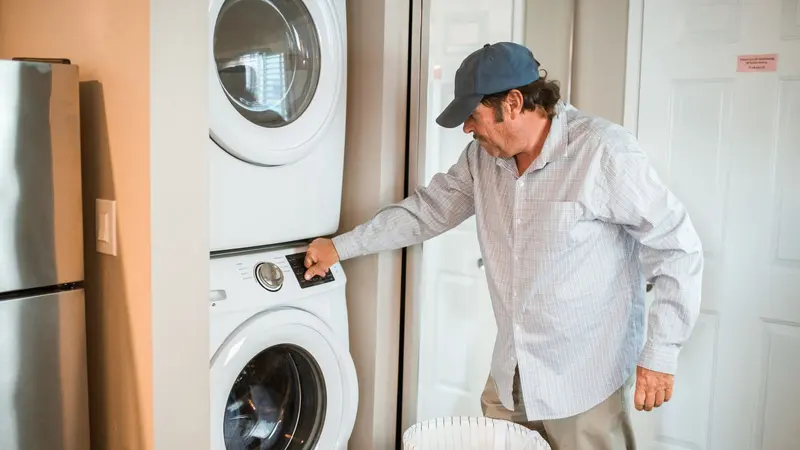 Washer & Dryer
Photo: RDNE Stock project / Pexels
Washer & Dryer
Photo: RDNE Stock project / Pexels When a technician hands you a quote, the real question is not whether the repair is possible but whether it is worth it. A few clear factors will get you to a confident answer without agonizing over it. Here is the framework we use when customers ask.
Part of our guide to the repair that ends each appliance.
Start with the machine age
Washers and dryers typically last ten to thirteen years with normal household use. Under five years, repair almost always wins because the remaining components have plenty of life left. Past twelve, a significant repair often just moves the failure to the next worn part. The six-to-eleven range is where the other factors decide it.
Apply the fifty percent rule
If the repair costs more than half the price of a comparable new machine, replacement usually makes better financial sense, and that threshold should drop as the unit ages. Practically, that means declining a $500 repair on a nine-year-old washer while approving the same repair on a four-year-old one. Get the quote in writing with parts and labor separated.
Some failures are effectively terminal
On front-load washers, a failed tub bearing or a cracked spider arm often requires the outer tub assembly, which can approach the machine value. On top-loaders, a failed transmission is similar. On dryers, by contrast, almost nothing is terminal: motors, elements, belts, and rollers are all straightforward and reasonably priced.
Count the repair history
Two significant repairs in eighteen months is a strong signal. It usually means the machine has crossed into general wear rather than suffering one isolated failure, and the next call is likely coming. One repair after seven quiet years tells you the opposite: the machine has been treated well and is worth keeping.
Do not forget the hidden costs of replacing
A new machine is not just the sticker price. Budget $75 to $180 for delivery and installation, $25 to $50 for haul-away, and new fill hoses. Stacked or closet installations may need a different footprint entirely. And if only one half of a matched pair failed, replacing it can leave you with a mismatched stack that no longer fits the kit.
Get a real diagnosis before deciding
Guessing from symptoms leads people to replace a $1,000 machine over a $180 part, and just as often to sink money into a machine with a failing bearing. A diagnostic fee is a small price for an accurate answer, and most shops credit it toward the repair. FlexFul can usually get a technician out same day across the Chicagoland area.
Frequently asked questions
Are new appliances less reliable than older ones?
They are more complex, with more electronics, but they also use less water and energy. Maintenance and correct installation matter more than model year.
Is an extended warranty worth buying?
Read what it excludes. Many exclude the exact wear items that fail most, and the premium often approaches the cost of one out-of-pocket repair.
Should I replace both the washer and dryer together?
Only if both are near end of life or you need a matched stackable pair. Otherwise replace the failed unit and keep the working one.